Commercial Waste Finsbury Park: Sustainable Solutions for an Eco-Friendly Waste Disposal Area
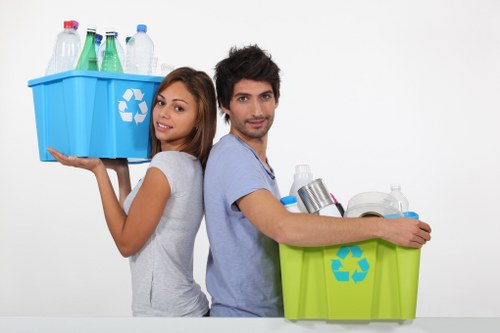 At the heart of north London, Commercial Waste Finsbury Park operates as a responsible partner for businesses seeking an eco-friendly waste disposal area and practical services tailored to the local commercial landscape. Our approach balances operational efficiency with environmental stewardship: preventing waste where possible, maximising recycling rates, and ensuring residual rubbish is handled in the most sustainable way. We work closely with businesses across the Finsbury Park catchment — from retailers and cafes to small industrial units — to create a measurable, low-carbon model for commercial refuse management.
Our ambitions are clear and measurable. The organisation has set a progressive recycling percentage target to drive continual improvement: 65% recycling of all collected commercial material by 2028, with annual reviews to increase ambition as infrastructure and partnerships mature. This target applies across all categories we handle — dry mixed recycling, cardboard and paper, glass, metals, and controlled streams such as food and wood waste — and is supported by reporting and transparent metrics that businesses can review.
 Working in the context of local borough strategies, our transfer logistics are organised to reduce miles and emissions. We route material via local transfer stations in Haringey and Islington and coordinate with nearby consolidation points to streamline loads. By leveraging local transfer stations and consolidation hubs, commercial loads are aggregated before onward transport to recycling facilities or licensed treatment centres, cutting vehicle movements and enhancing diversion rates from landfill.
Partnerships with Charities and Reuse Networks
One of the most effective ways to prevent waste is to keep items in use. Commercial Waste Finsbury Park has established partnerships with a range of charities and social enterprises to divert reusable goods from the waste stream. We work with local and national charities to redistribute items such as business surplus stock, office furniture, textiles, and small electricals. These collaborations support local community reuse initiatives and deliver social as well as environmental value.
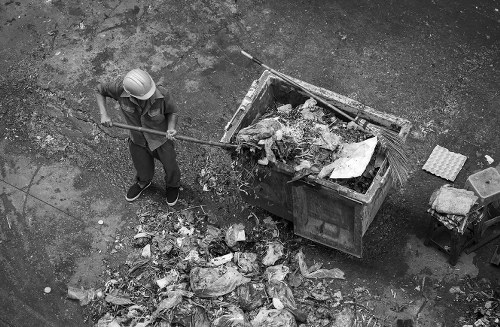 Our vehicles regularly collect separable, reusable items and deliver them to vetted charity partners and community reuse hubs across the boroughs. By combining scheduled collections and ad-hoc collections during clear-outs, we create continuous channels for reuse. The result is fewer items needing disposal and more resources kept circulating in the community economy.
Key elements of these partnerships include: coordinated collections, certified data for reuse and donation, and joint promotion of reuse campaigns. Charity collaborations are also an important part of meeting broader sustainability goals in the local commercial waste sector.
Low-Carbon Fleet and Sustainable Rubbish Area Management
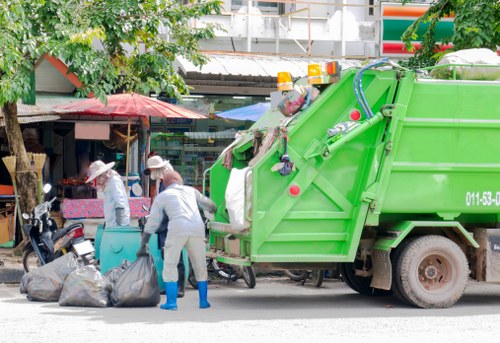 Our fleet strategy is central to reducing the carbon footprint of Finsbury Park commercial waste operations. We deploy a mix of low-carbon vans and electric-powered refuse vehicles where practical, prioritising electric or hybrid small vans for inner-urban collections. This reduces local air pollution and aligns with London’s wider low-emission initiatives. Low-emission collection rounds are planned to maximise stop density and minimise empty miles.
Operationally, we focus on creating a well-managed sustainable rubbish area for clients: secure, clearly labelled storage for segregated streams; compactors and balers where appropriate to reduce transport frequency; and on-site segregation training for staff. We encourage businesses to adopt the boroughs’ approach to waste separation: separate food waste caddies, mixed dry recycling for paper, cardboard and rigid plastics, and dedicated containers for glass and metal. Consistent separation at source dramatically increases capture rates and reduces contamination.
Specific recycling activities we handle locally include:
- Cardboard and paper collection — frequent kerbside-style pickups for retail and distribution centres.
- Glass and bottle consolidation — on-site crates and scheduled emptying to avoid breakage and contamination.
- Food waste diversion — separate bins and transfer to anaerobic digestion where available.
- WEEE and small electrical recycling — repairable devices channelled to reuse partners or certified recyclers.
- Wood and bulky waste recovery — sorted for reuse, chipping, or energy recovery where appropriate.
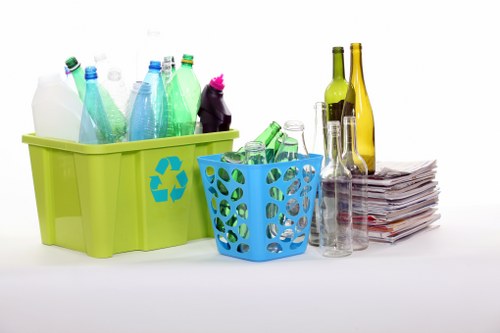 Monitoring and continuous improvement underpin our sustainable work. We provide regular reporting on tonnages, diversion rates and progress toward the recycling percentage target so clients can see the impact of adopting cleaner practices. Internal audits, route optimisation, and investment in low-carbon vans are all part of the strategy to meet and then exceed our baseline targets. By tracking contamination levels and adjusting collections, we sustain upward momentum in household and commercial recycling participation.
Community engagement sits alongside operational measures: we support local reuse events, collaborate with borough sustainability teams, and promote campaigns that reflect the shared goals of reduced waste and enhanced recycling. Commercial waste in Finsbury Park is not only about removing rubbish — it is about creating a resilient, circular approach to business waste that benefits customers, communities, and the environment.
In summary, our model for an eco friendly waste disposal area and a truly sustainable rubbish area rests on three pillars: ambitious recycling targets, intelligent logistics using local transfer stations, and strong partnerships with charities and low-carbon transport. Together these measures help businesses in Finsbury Park and surrounding boroughs meet regulatory expectations and go further in reducing environmental impact.
