Complaints Procedure for Commercial Waste Finsbury Park
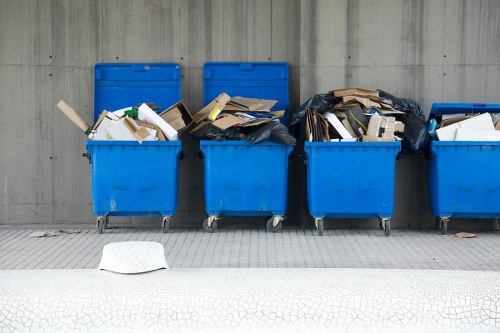 This Complaints Procedure explains how businesses can raise concerns about commercial waste services in and around Finsbury Park. It applies to all commercial rubbish collection and business waste removal contracts operated by the company and sets out the stages of escalation, expected timeframes, and how issues will be recorded. The aim is to resolve problems fairly, promptly and transparently while protecting the operational integrity of refuse and recycling collections for commercial premises.
The procedure covers service failures such as missed collections, inappropriate handling of commercial refuse, contamination incidents, and contractual non-compliance. It is intended for use by customers who purchase commercial waste services, including skip hire, scheduled collections, and ad hoc refuse removal. Where applicable the policy references industry standards for waste transfer, duty of care requirements and environmental permitting obligations without providing legal advice. Customers should follow the stages below to ensure their complaint is handled effectively.
 Stage 1: Informal resolution. Most issues are resolved quickly at the operational level. Customers should initially report the problem to the on-duty operations team or account manager through their usual reporting channel. When a report is received the company will log the issue, acknowledge receipt within two working days and aim to provide a practical resolution within five working days. If additional investigation is required, the customer will be advised of a revised timescale and interim actions.
Stage 2: Formal complaint and investigation
Stage 2 is for complaints that remain unresolved after Stage 1 or those that are serious in nature, such as persistent service failures or incidents with potential regulatory impact. A formal complaint will trigger a documented investigation led by a designated complaints officer. The investigation will: identify the root cause, review records (such as collection logs and CCTV where available), and interview relevant staff. The officer will produce a written response outlining findings and proposed remedies within ten working days of complaint receipt whenever practicable.
 The remedies may include correction of missed collections, adjustments to billing, operational changes, employee retraining, or remedial environmental actions where contamination or improper disposal is involved. Any remedial action will be proportionate and aimed at preventing recurrence. Where a regulatory breach is identified, the company will follow statutory reporting obligations and cooperate with relevant authorities, always maintaining confidentiality where required by law.
During formal investigation customers can expect clear communication: progress updates at agreed intervals, a summary of evidence considered, and a final decision explaining the outcome. If the complaint is complex, an extension to the standard timeframe may be notified with reasons and an estimated completion date. The customer will be given a written explanation of the decision and any operational changes that will be implemented.
Stage 3: Escalation, review and records
If a customer is dissatisfied with the Stage 2 outcome they may request a senior management review. The review will be carried out by an independent senior manager who was not previously involved in the investigation. That reviewer will re-examine the original findings, consider any new information provided by the customer, and issue a final internal determination. This decision is intended to be conclusive for internal processes and will be documented in the complaints file.
 The company maintains comprehensive records of all complaints as part of its compliance and quality assurance systems. Records include the complaint details, correspondence, investigation notes, evidence reviewed, remedies applied and timelines. These records are retained according to corporate retention policy and applicable legislation to enable audits and to support continuous improvement of commercial waste services, including commercial waste collection schedules and business waste disposal practices.
 Performance monitoring and learning are integral to the complaints procedure. Patterns of complaints are analysed periodically to identify recurring issues such as route inefficiencies, container sizing problems, or contamination trends. Action plans resulting from these analyses may involve route optimization, customer liaison improvements, or updated service specifications to reduce future complaints and enhance the quality of rubbish collection for commercial clients.
Expectations and rights: Customers should provide clear details of incidents, including dates, times, and any supporting evidence like photographs or collection records where available. The company commits to treating all complaints seriously and to avoiding discrimination in handling complaints. While this procedure sets out internal mechanisms for investigation and remediation, it does not replace statutory rights or external dispute resolution options where those are applicable under law.
Confidentiality: All complaints will be handled confidentially to the extent permitted by law. Personal data and commercial information will be processed only for the purpose of investigation and service improvement and will be protected in line with data protection obligations. The company will not disclose complainant information externally except as required to resolve the complaint, comply with regulatory obligations, or by law.
Continuous improvement: The existence of a clear, consistent complaints mechanism supports transparency and trust between commercial customers and service providers. The company is committed to learning from complaints and to integrating improvements into the delivery of commercial waste services, whether that relates to scheduled refuse collection, recycling streams, or bespoke waste management solutions for business premises.
For contractual matters or disputes not resolved through this complaints procedure, commercial customers should consult the relevant contract terms and any available statutory remedies. This complaints procedure is intended to provide a fair internal pathway to resolution that complements contractual and legal routes while focusing on remedial and preventative outcomes for business clients.
Key principles summarised:
- Prompt acknowledgement and staged escalation
- Documented investigations with transparent remedies
- Confidential, proportionate handling and record keeping
By following this process the company aims to maintain high standards for all commercial waste operations in Finsbury Park and surrounding districts, ensuring that complaints lead to timely resolutions and measurable service improvements.
