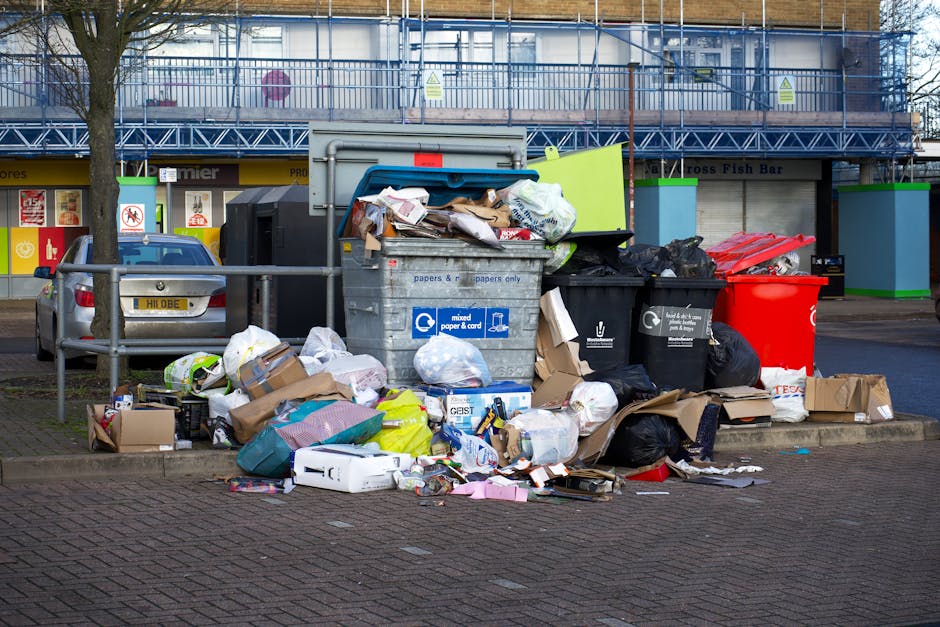
Avoid hidden rubbish removal fees in Finsbury Park
If you have ever had a rubbish clearance quote that looked fine at first and then quietly grew legs, you are not alone. Hidden charges can turn a simple tidy-up into an annoying little money trap, especially when you are trying to clear a flat, an office, or a half-renovated room in Finsbury Park. The good news? Avoid hidden rubbish removal fees in Finsbury Park is mostly about knowing what to ask, what to confirm, and what should be included before anyone turns up with a van.
This guide breaks down the common fee traps, how proper rubbish removal pricing usually works, what to check in the fine print, and how to compare quotes without getting pulled into a confusing mess. It is practical, plain-English advice for anyone who wants the job done cleanly, fairly, and without awkward surprises at the kerb.
Why Avoid hidden rubbish removal fees in Finsbury Park Matters
Let's face it, rubbish removal is rarely the fun part of the week. You are usually dealing with a loft that has become a museum of old boxes, a garden that needs a full clear-out after a wet London winter, or a flat where the hallway has started to look a bit... temporary. In those moments, low upfront pricing can be very tempting. But if the quote is vague, you can end up paying extra for things you thought were already included.
Hidden fees matter because they affect more than the final bill. They can change the timing of the job, create stress on the day, and make it hard to compare providers properly. One company may appear cheaper until they add labour, parking, congestion-related access issues, item sorting, or disposal surcharges. Another might look dearer on paper, but actually include everything in a clear, honest price. That difference is easy to miss if you are rushing.
In Finsbury Park, access can be a real factor too. Tight stairwells, shared entrances, limited parking, and busy roads can all affect how a collection is carried out. None of that is a problem in itself. The problem is when those details are not discussed in advance. A decent provider should ask useful questions, not spring a surprise charge after the van is loaded.
Key takeaway: the cheapest quote is not always the cheapest job. A transparent quote usually saves more money than a bargain headline price with add-ons tucked away in the background.
How Avoid hidden rubbish removal fees in Finsbury Park Works
Good rubbish removal pricing should be simple to understand. The price is usually based on a few basic things: the volume of waste, the type of waste, how easy it is to collect, and whether the job needs extra handling or special disposal. If the company explains those factors clearly, you are already in safer territory.
Hidden fees tend to appear when one or more of these details are left vague. For example, a quote might be based on a single room, but the actual waste turns out to be spread across a loft, a shed, and a back garden. Or a company may quote for standard mixed waste, then add extra charges for mattresses, fridges, or hazardous materials. Truth be told, these items can require different handling, so the issue is not that a fee exists. The issue is whether it was disclosed before you agreed.
There is also the question of labour. Some rubbish removal services include loading, lifting, and basic separation. Others charge extra if items are heavy, awkward, or need to be carried a long way. If your property has steps, narrow access, or restricted parking, make sure that is discussed upfront. A proper quote should be built around the real job, not a best-case fantasy of the job.
For broader waste services, it can help to review the provider's general waste removal approach and then check whether the quoted service includes the access and loading conditions at your property. If you are dealing with business premises, the expectations may be different again, so it is worth looking at business waste removal if the clearance is commercial rather than domestic.
Key Benefits and Practical Advantages
Getting pricing clear from the start is not just about avoiding annoyance. It has some very practical advantages that make the whole process smoother.
- Better budget control: you know what you are committing to before the team arrives.
- Faster decisions: clear pricing makes comparing companies much easier.
- Less day-of friction: nobody wants a pricing argument on the doorstep.
- Cleaner scheduling: if the scope is clear, the team can plan the right vehicle and crew.
- Lower risk of delays: special items or access issues are handled before collection day.
There is also a trust benefit. Transparent pricing is often a sign that the company runs other parts of the job in an organised way too. Not always, of course, but often enough to matter. If a business is careful about explaining costs, it is usually more careful about paperwork, safety, and disposal too. That sort of detail can matter more than people expect, especially when you are leaving waste with a third party.
If you are clearing bulky items like a worn sofa or a broken fridge, it can be useful to compare service pages like mattress and sofa disposal and fridge and appliance removal. Those pages often clarify whether specialist handling is part of the service or priced separately.
Who This Is For and When It Makes Sense
This advice is useful for almost anyone arranging waste collection in Finsbury Park, but it is especially relevant in a few common situations.
Homeowners and tenants often need a one-off clear-out after a move, renovation, or big declutter. The risk here is simple: you may focus on speed and overlook what is included in the quote. If you are moving out of a flat with a lift that barely fits a suitcase, the access question matters more than usual.
Landlords and letting agents need predictable costs. A property left with a pile of furniture, bagged waste, or forgotten appliances can become expensive fast if the collection is not scoped correctly.
Tradespeople and builders often face mixed waste loads, timber, plasterboard, packaging, and offcuts. It is smart to check a service like builders waste clearance when the job includes construction debris, because building waste can be priced and handled differently from general rubbish.
Offices and local businesses may need a clear-out of desks, shredded documents, fixtures, or mixed commercial waste. That is where detailed quotes matter a lot, because commercial clearances sometimes include access constraints, timed arrivals, or security requirements. If confidential documents are involved, you may also want to review confidential shredding separately rather than assuming it comes bundled in.
Anyone clearing larger spaces like a loft, garage, or entire property should be extra careful. Bigger jobs are exactly where small assumptions become expensive. A quote that is "roughly right" can still be wildly wrong on the day.
Step-by-Step Guidance
Here is a practical way to avoid surprise charges without turning the process into a full-time job.
- List what needs removing. Be specific. "Old junk" is not enough. Write down furniture, appliances, bags, garden waste, boxes, or building debris.
- Separate anything unusual. Fridges, mattresses, paint, chemicals, or electricals may need special handling.
- Take a few clear photos. Good images help a provider estimate volume and access more accurately. A quick photo by daylight usually works best.
- Describe access honestly. Mention stairs, parking limits, rear-garden access, narrow hallways, or permit issues. No one benefits from pretending the job is easier than it is.
- Ask what is included. Loading, labour, disposal, VAT, travel, parking, and waiting time should all be clear.
- Ask what counts as extra. Find out how the company handles additional items, heavy lifting, restricted access, or separate waste types.
- Check the wording before booking. Read the quote, terms, and any notes about item categories or delays. A minute spent here can save a lot later.
- Confirm the final price trigger. Ask what would make the quoted price change, and by how much. If they cannot explain this calmly, that tells you something.
Small tip, but useful: if the provider gives you a price over the phone, repeat back the job in your own words. It sounds almost too basic, yet it catches a lot of misunderstandings. "So this includes two sofas, four bags, one fridge, and loading from a second-floor flat with stairs?" That one sentence can prevent a messy surprise.
For larger domestic jobs, you may want to compare service types like home clearance, house clearance, or flat clearance depending on the property. Those service pages can help you match the job type more accurately, which is half the battle.
Expert Tips for Better Results
Here is the stuff people learn the hard way, usually after one too many "oh, that'll be extra" moments.
1. Ask for the pricing logic, not just the price. A number is fine, but the reason behind the number is better. Volume, waste type, access, and urgency should all make sense together.
2. Watch for vague phrases. Words like "subject to inspection" or "additional charges may apply" are not automatically bad, but they should be followed by clear examples. If everything stays vague, keep asking.
3. Be careful with mixed waste. A few ordinary bags are one thing. A load containing rubble, metal, furniture, appliances, and garden waste is another. Mixed loads can be perfectly manageable, just not identical in price or handling.
4. Plan around parking and access. In places like Finsbury Park, a van that cannot park near the property can change the whole rhythm of the job. Time spent walking waste to the vehicle is labour, so it should be discussed upfront.
5. Keep item counts realistic. Overestimating is usually better than underestimating. One extra wardrobe can change the volume more than people think. Sneaky how that happens.
6. Check if recycling affects the quote. Some businesses separate reusable, recyclable, and general waste as part of their process. That is a good thing. It can improve disposal outcomes and sometimes helps keep the quote more accurate.
If sustainability matters to you, it is worth checking the provider's recycling and sustainability information. You are not just paying for removal; you are also paying for the route the waste takes afterwards.
Common Mistakes to Avoid
The biggest mistake is assuming that all quotes mean the same thing. They do not. Two providers can say "all included," but mean very different things by it. One includes labour, disposal, and access allowances. Another includes only a bare minimum estimate, then adjusts later. That is the trap.
Another common error is forgetting about specific items. A mattress tucked behind a pile of boxes, or an old fridge in the garage, can trigger an extra fee if it was not mentioned. This happens all the time. No drama, just an avoidable headache.
People also sometimes hide important details to make the quote look lower. Don't. If the waste is on the third floor, if there is no lift, or if the van cannot park nearby, say so. The honest version is usually cheaper in the end because it avoids re-pricing on arrival.
Other mistakes include:
- accepting a quote without asking what happens if the load is larger than expected
- ignoring separate charges for special items
- not checking whether VAT is included
- forgetting to mention restricted access or parking issues
- assuming labour and disposal are bundled when they are not
For item-specific jobs, it helps to check service pages before booking. If the clearance includes sofas or beds, furniture disposal and furniture clearance may be more relevant than a general waste collection. If you are clearing the loft, then yes, loft clearance is the better fit. Obvious once you say it, but easy to miss when the room is full and you are tired.
Tools, Resources and Recommendations
You do not need fancy tools to avoid hidden fees. A mobile phone, a notebook, and a steady habit of asking direct questions will do most of the work. Still, a few practical resources can help.
- Photos of the waste: take wide shots and close-ups. Wide shots help estimate volume; close-ups help identify item types.
- A simple room list: note where each item is located so the provider understands access points.
- A parking note: if the van will need to wait, park far away, or use a permit bay, mention it early.
- A comparison sheet: write down exactly what each quote includes. It takes five minutes and makes weak offers stand out fast.
For practical planning, you may also want to review pricing and quotes, especially if you are comparing different service levels or trying to understand what the final number is built from. If you are not sure whether certain items can go together, the page on what can go in a skip can be a useful reference point for general waste sorting, even if you are not hiring a skip itself.
And if security or payment method matters to you, it is sensible to check payment and security before you hand over card details or confirm the booking. Quiet confidence beats crossed fingers every time.
Law, Compliance, Standards, or Best Practice
Waste removal is not just a matter of lifting bags into a van. In the UK, responsible waste handling matters because different waste streams need to be managed properly, and some items require extra caution. You do not need to memorise regulations to book a service, but you should expect the company to act carefully and explain any special handling where relevant.
At a practical level, good practice usually means the provider is transparent about what they can take, what needs specialist disposal, how they separate waste, and whether any item is restricted. For example, hazardous materials should not be treated like general household rubbish. Appliances may have components that need different treatment. Bulky furniture may be recyclable or reusable in part, but only if handled correctly.
You should also expect clear terms, fair pricing, and a sensible complaints process if something goes wrong. That is why it is worth looking at a provider's terms and conditions and complaints procedure before booking. It is not about being suspicious. It is about being properly informed.
If the job involves potentially sensitive material, damaged appliances, or anything that could be classed as hazardous, check the relevant specialist pages first. hazardous waste disposal and insurance and safety are both worth a look when the clearance is more than a basic tidy-up.
Options, Methods, or Comparison Table
Different clearances suit different situations. A quick comparison can make the pricing conversation much easier.
| Option | Best for | How pricing usually feels | Watch out for |
|---|---|---|---|
| General rubbish removal | Mixed bags, household clutter, small clear-outs | Usually straightforward if volume is clear | Extra items, access issues, special waste |
| Furniture-specific clearance | Sofas, wardrobes, tables, mattresses | Can be clear if item count is fixed | Heavy lifting, stair carry, disassembly |
| Appliance removal | Fridges, washing machines, cookers | May involve special handling | Disconnected units, accessibility, recycling rules |
| Property clearance | Whole flats, houses, lofts, garages | Usually based on volume plus labour | Underestimating the amount of waste |
| Builder's clearance | Renovation debris and trade waste | Depends on waste type and weight | Rubble, plasterboard, mixed loads |
That table should help you match the service to the job instead of squeezing everything into one vague quote. For example, a single broken chair and a couple of bags is very different from a full garage clearance. Same for an office empty-out, which may be better suited to office clearance if desks, chairs, and files are involved.
Case Study or Real-World Example
A fairly typical Finsbury Park scenario goes like this. Someone is clearing a one-bedroom flat after a long-overdue declutter. There are a few bags, an old armchair, a broken bedside table, and a small fridge tucked into the kitchen corner. The first quote sounds good because it is based on "a small load."
Then the details come out. The flat is on an upper floor, there is no lift, parking is awkward, and the fridge needs specific handling. Suddenly the price changes. Not because anyone is being difficult, but because the original quote did not fully reflect the job.
Now compare that with a better approach. The customer sends photos, mentions the stairs, lists the fridge separately, and asks whether labour, disposal, and access are included. The quote comes back a little higher at first, but it is clearer. On the day, there is no haggling at the door, no awkward call to "check with the office," and no surprise charge lurking at the end. The job starts, gets done, and everyone moves on with their day.
That is really the point. Clear pricing does not just save money. It saves energy. And in a busy area like Finsbury Park, that matters more than people admit.
Practical Checklist
Use this checklist before you confirm a rubbish removal booking.
- Have I listed every item that needs removing?
- Have I mentioned bulky, heavy, or unusual items?
- Have I described access honestly, including stairs and parking?
- Do I know whether labour and disposal are included?
- Have I asked about VAT and any extra charges?
- Do I know how special items are priced?
- Have I compared at least two quotes on the same basis?
- Have I checked the terms and conditions?
- Have I asked what could change the final price?
- Do I understand the payment method and when it is taken?
If you can tick most of those off, you are already ahead of the game. It does not need to be complicated. Just clear, calm, and properly specified.
Conclusion
Avoid hidden rubbish removal fees in Finsbury Park by treating the quote as the start of the conversation, not the end of it. The more clearly you describe the waste, the access, and any special items, the easier it is to get a fair price and a smooth collection. That is true for flats, houses, offices, gardens, garages, and everything in between.
Most surprise charges come from missing information, vague wording, or assumptions made too early. Once you know what to check, the whole process becomes much easier. Not perfect, not magical, just sensible. And honestly, sensible is underrated.
Get a free quote today and see how much you can save.
When the job is priced properly and handled with care, the whole thing feels lighter. And that is the goal, really: less hassle, less guesswork, and a clean space you can breathe in again.
Frequently Asked Questions
What are hidden rubbish removal fees?
Hidden rubbish removal fees are extra charges that are not made clear at the start of the quote. They can include labour, access issues, special item handling, VAT, or disposal charges that appear later.
How do I avoid surprise charges when booking rubbish removal in Finsbury Park?
Give a full list of the waste, share photos, explain access clearly, and ask exactly what the quote includes. If anything is vague, ask for it in plain language before you book.
Are all rubbish removal quotes the same?
No, they are not. Two quotes can look similar but include different things. One might cover disposal and labour, while another may exclude special items or difficult access.
Do stairs or narrow access affect the price?
They often can. If the team has to carry waste a long way or down several flights of stairs, the job may take more time and labour. That should be discussed upfront.
Is it cheaper to book rubbish removal early?
Sometimes, yes, especially if you are not in a rush. Urgent bookings can be harder to fit in and may cost more. Early booking also gives you time to compare quotes properly.
Should I mention fridges, mattresses, or other bulky items separately?
Yes. Specialist items may need different handling or disposal. Mention them clearly so they are included in the quote from the start.
What should be included in a fair rubbish removal quote?
A fair quote should explain the volume or item count, labour, loading, disposal, and any extra charges that could apply. It should not rely on vague wording alone.
Can I compare rubbish removal prices by phone?
Yes, but only if the job is described properly. If possible, send photos and confirm item types, access, and parking so the comparison is based on the same information.
What if the waste turns out to be more than I expected?
A good provider should explain how extra waste is handled before the job starts. If you are unsure, slightly overestimate rather than underestimating the load.
Does mixed waste cost more?
It can. Mixed waste may need sorting or different disposal routes, depending on what is included. That is why it helps to describe the load as accurately as possible.
Why does a quote sometimes change on arrival?
Usually because the original description did not match the actual job. The best way to prevent this is to be detailed about the waste, the location, and the access conditions.
Where can I check pricing and service details before booking?
You can review the provider's pricing information, terms, and service-specific pages before confirming. That gives you a better sense of what is included and what may be charged separately.